


Regular health checkups are a good habit that helps protect the body against dangerous conditions that may remain hidden deep within the body. However, to identify potential health risks 3–5 years in advance, comprehensive health screening at the cellular level using modern biomedical technology may be a suitable approach.
WHAT METHODS ARE INCLUDED IN COMPREHENSIVE HEALTH SCREENING AT THE CELLULAR LEVEL?
Cellular-level screening involves comprehensive health assessment methods that use advanced technologies to analyze and evaluate the condition of cells in the body and detect early signs of abnormalities in organs. This may support disease prevention, help identify medical conditions, and optimize personalized treatment.
Today, comprehensive health screening tests at the cellular level are widely available in countries around the world, including the United States, Germany, and Switzerland, as well as in Asian countries such as Japan, South Korea, and China.
In Vietnam, HelenCare is proud to be one of the pioneering centers to introduce cellular-level screening technology from Switzerland. Customers visiting the center can currently undergo the following procedures:
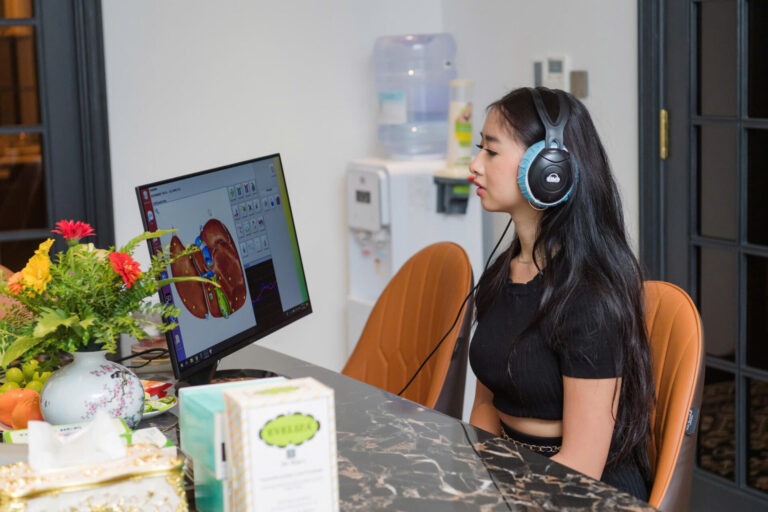
- 3D Ultra Bio Scan – Advanced Biological Screening
This method uses biological waves to measure neurological responses between the brain and internal organs. It aims to identify abnormalities ranging from early-stage issues to potentially serious conditions.
This method is popular in Western countries because it is non-invasive, does not expose patients to ionizing radiation, and provides an overview of the entire body.
- Darkfield – Dark-Field Blood Cell Analysis
This method analyzes the shape and movement of blood cells to identify diseases and their specific causes that conventional blood tests may miss, such as bacteria, parasitic fungi, leaky gut syndrome, musculoskeletal disorders, chronic diseases, and chronic poisoning.
This screening method provides an overall view of blood cells and the internal environment of the body, and is therefore claimed to offer a high level of accuracy.
- Heavy Metal Test – Heavy Metals and Trace Minerals Analysis
This method uses spectroscopic technology to measure excesses or deficiencies of heavy metals, minerals, and trace elements in cells and tissues. The results are then used to assess possible causes of metabolic and excretory disorders, and may even be used to explain poor drug absorption or the elimination of medications used to treat diseases.

- VNS Analytics – Anxiety and Stress Testing
This method assesses the autonomic nervous system by measuring and comparing the body’s natural breathing rhythm with a standardized biological breathing rhythm. The results are then used to analyze potential causes of serious health conditions, including high blood pressure, cardiovascular disease, diabetes, and chronic respiratory diseases.
KEY ADVANTAGES OF CELLULAR-LEVEL HEALTH SCREENING
Cellular-level health screening may help detect various diseases that conventional tests could miss. As a high-tech screening approach, it aims to identify abnormalities even at very early stages. Combined with a doctor’s clinical assessments, the results may help guide treatment and prevention plans at an early stage, potentially 3–5 years before a condition becomes apparent.
Another notable advantage of cellular-level screening methods is their safety and convenience. Customers do not need to worry about electromagnetic radiation, radioactive exposure, or invasive procedures, nor do they need to fast or follow dietary restrictions before testing. This saves time, making the methods particularly suitable for people with busy schedules.
These tests are claimed to achieve high accuracy rates (over 90%) and identify the causes of disease rather than focusing solely on symptoms. They are presented as a valuable complement to conventional diagnostic tests, helping doctors select medications and personalized treatment approaches for each patient.

